What Is the Best Small, Easy-to-Drive Motorhome for First-Time RV Buyers?
What is the best small, easy-to-drive motorhome for first-time RV buyers near me?
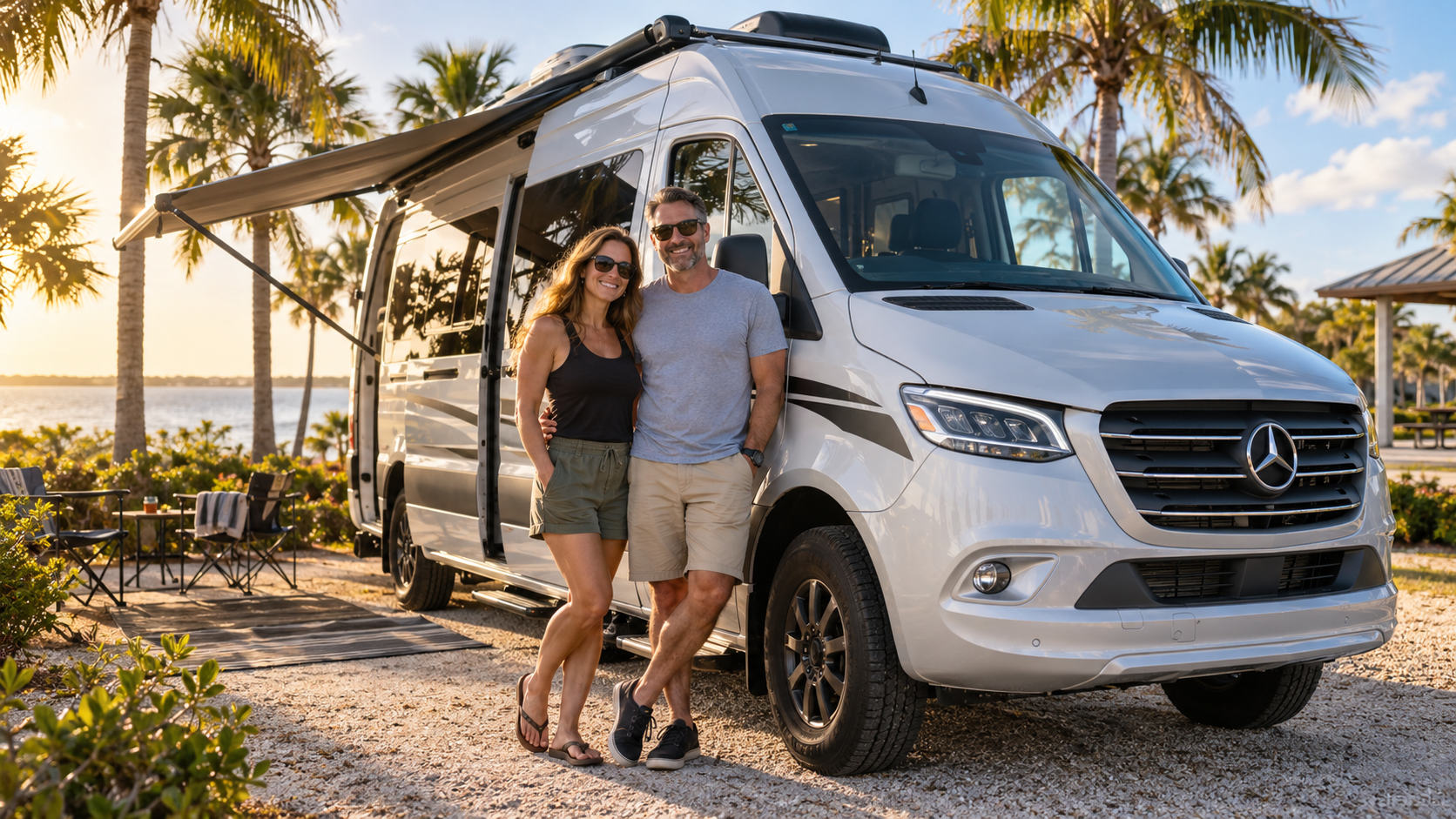
For most first-time buyers, the easiest motorhome to drive is a Class B camper van, followed closely by a compact Class C or Class B+ motorhome. Class B vans drive much like a large passenger van, fit in standard parking spaces, and are simple to maneuver. Compact Class C and B+ models add more living space while staying manageable on the road. Florida buyers can compare all three styles at Gerzeny’s RV World locations in Nokomis, Bradenton, Lakeland, and Fort Myers.
What Makes a Motorhome Easy to Drive?
A motorhome is easiest to drive when it is short, narrow, and built on a familiar van or light-truck chassis. Smaller motorhomes handle more like everyday vehicles, which builds confidence quickly for new drivers.
Key features that make a motorhome beginner-friendly:
Shorter overall length: Easier turns, lane changes, and parking.
Van-style driving position: Feels similar to driving a large SUV or passenger van.
Good visibility: Large windshields, side mirrors, and backup cameras reduce blind spots.
Modern safety features: Many newer van chassis offer driver-assist technology, depending on the model.
No towing required: You drive and camp in one vehicle, with no hitching or trailer backing.
Practical tip: The best way to judge drivability is a test drive. Take the motorhome on a highway, through a parking lot, and around a few tight turns before you decide.
What Are the Best Types of Small Motorhomes for Beginners?
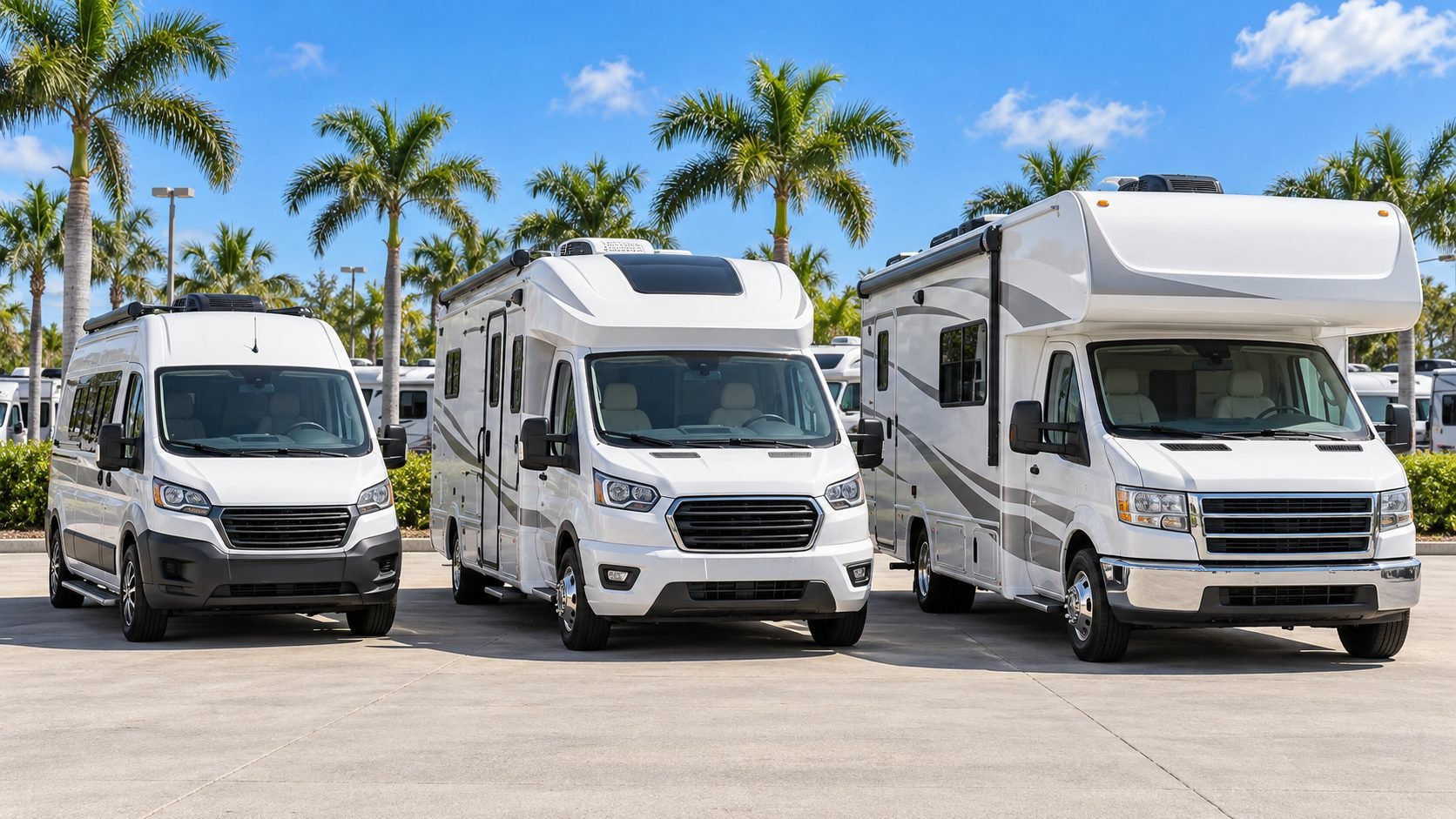
The three best small motorhome types for first-time buyers are Class B camper vans, Class B+ motorhomes, and compact Class C motorhomes. Each balances drivability and living space differently.
Class B Camper Vans
Class B motorhomes are built inside a van body. They are the smallest and easiest motorhomes to drive.
Best for: Solo travelers and couples, weekend trips, and owners who want to use the van as a second vehicle
Pros: Easiest to drive and park, often the best fuel economy among motorhomes, fits in many driveways
Cons: Limited interior space, often a wet bath (shower and toilet in one space), smaller water tanks
Gerzeny’s RV World carries Class B options such as the Winnebago Travato, Winnebago Solis, Coachmen Nova, and Pleasure-Way Plateau. Browse all Class B motorhomes.
Class B+ Motorhomes
Class B+ motorhomes are built on a van chassis but with a wider living area behind the cab. They feel more spacious than a Class B while keeping a compact footprint.
Best for: Couples who want more room, longer trips, and a more traditional bathroom layout
Pros: More interior space than a Class B, still easy to drive, often better storage
Cons: Slightly longer and taller than a camper van
Examples at Gerzeny’s include the Leisure Travel Vans Unity and Leisure Travel Vans Wonder. See all Class B+ motorhomes.
Compact Class C Motorhomes
Class C motorhomes are built on a truck or van chassis with a cab-over bunk or storage area. Compact versions offer family-friendly layouts in a size that is still manageable for beginners.
Best for: Small families, couples who want a separate bed, and travelers who want more storage
Pros: More sleeping space, larger bathroom, good balance of size and comfort
Cons: Wider and taller than van-based motorhomes, more noticeable in crosswinds
Popular compact options include the Winnebago View, Winnebago EKKO, Coachmen Prism Elite, Winnebago Minnie Winnie, and the Forest River Sunseeker in its shorter floorplans. Browse all Class C motorhomes.
Which Small Motorhome Is Best for Your Travel Style?
Choose a Class B for maximum ease, a Class B+ for extra room in a compact size, or a compact Class C for families and more sleeping space. Your travel style should drive the decision.
Best-for recommendations:
Easiest to drive and park: Class B camper van
Best for couples who want comfort: Class B+ motorhome
Best for small families: Compact Class C with a cab-over bunk
Best for weekend getaways: Class B
Best for longer trips or snowbird travel: Class B+ or compact Class C
Best for using as a daily or second vehicle: Class B
Ask yourself:
How many people will sleep in the RV?
Do you want a separate shower, or is a wet bath acceptable?
Will you stay at campgrounds with hookups or camp off-grid?
Where will you park or store it at home?
How long are your typical trips?
Practical recommendation: Many first-time buyers overestimate the space they need. If it is usually just two of you, start by touring a Class B and a Class B+ side by side. Most couples quickly feel which size fits.
What Should First-Time Buyers Know About Driving a Small Motorhome?
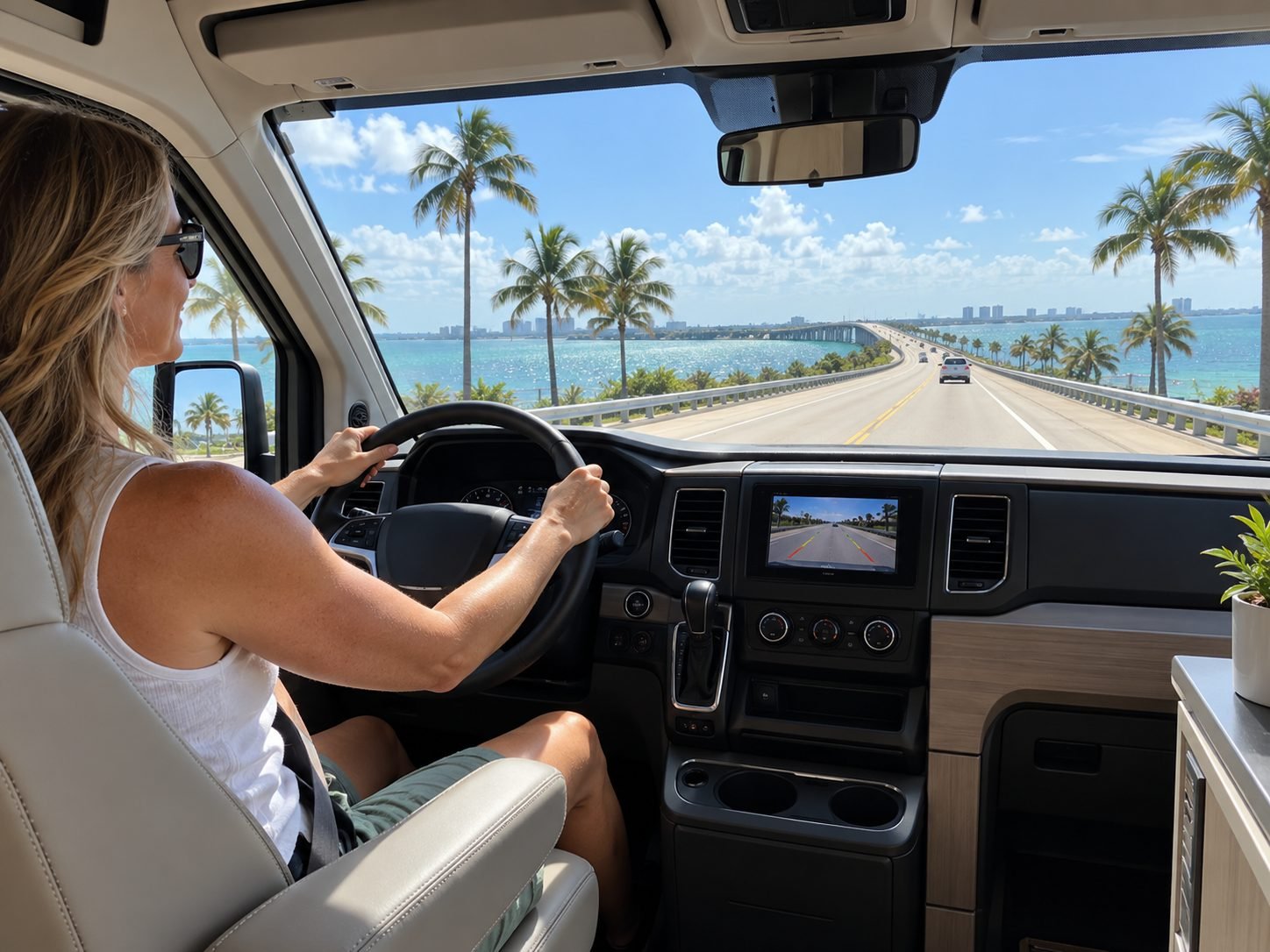
Small motorhomes are very manageable, but new drivers should get used to the height, length, braking distance, and wind sensitivity. A little practice goes a long way.
Driving tips for beginners:
Know your height: Watch for low bridges, drive-thru canopies, and parking garages. Keep your height on a note on the dashboard.
Allow more braking distance: Motorhomes weigh more than cars and take longer to stop.
Use your mirrors and camera: Adjust mirrors before every trip and use the backup camera when reversing.
Take wider turns: Rear overhang can swing wider than you expect.
Watch crosswinds: Taller Class C models feel wind more, especially on bridges and open highways.
Plan fuel stops: Choose stations with easy entry and exit.
Florida-specific considerations:
Heat and humidity: Strong air conditioning matters. Ask about roof A/C capacity and whether the generator or battery system can run it.
Hurricane season: Plan where you will store or move your RV during storms.
Sun exposure: Florida sun is hard on roofs, seals, and tires, so plan for regular inspections.
Parking rules: Check HOA and local rules before parking a motorhome at home. A Class B is often easier to keep in a driveway.
How Much Does a Small Motorhome Cost?
Small motorhome prices vary widely by type, brand, chassis, and features, and Class B vans often cost more per foot than larger RVs. Used models can lower the entry price considerably.
Factors that affect cost:
Type: Class B vans pack a lot of engineering into a small space, so they are often priced higher than you might expect for their size.
Chassis: Van chassis brands and drivetrains, including all-wheel or four-wheel drive, affect price.
Power systems: Lithium batteries, solar, and inverters add cost but improve off-grid comfort.
New versus used: A pre-owned motorhome can offer strong value, especially for first-time buyers still learning their preferences.
For the latest pricing, browse new RVs, used RVs, and current RV specials. You can also explore RV financing to see how payments fit your budget.
What Mistakes Do First-Time Motorhome Buyers Make?
The most common mistakes are buying too big, skipping a test drive, and overlooking storage, bathroom layout, and tank sizes.
Buying more RV than you need: A larger motorhome can feel stressful to drive and harder to park.
Skipping the test drive: Drivability is personal. Drive at least two types before deciding.
Ignoring the bathroom layout: A wet bath works for some travelers and frustrates others.
Overlooking storage and parking: Confirm you have a place to keep the RV and that local rules allow it.
Forgetting tank capacity: Smaller motorhomes have smaller fresh, gray, and black tanks, which matters for off-grid trips.
Underestimating maintenance: Motorhomes need both RV maintenance and chassis maintenance. A dealership with a full RV service department makes ownership easier.
Not checking your trade-in value: If you own a camper or vehicle, your trade-in can reduce your cost.
How Can Gerzeny’s RV World Help You Find the Right Small Motorhome?
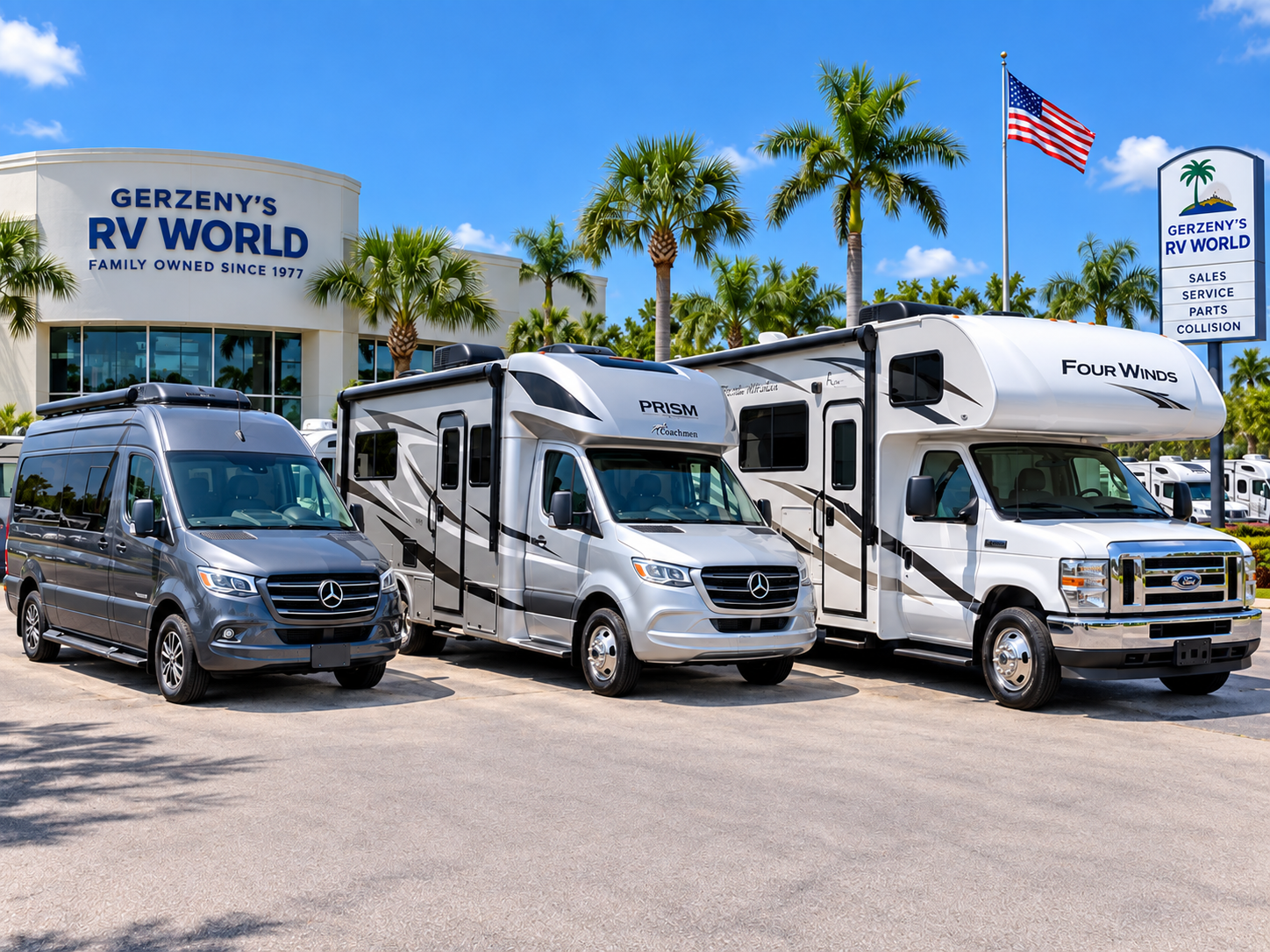
Gerzeny’s RV World is a family-owned RV dealership serving Florida since 1977, with locations in Nokomis, Lakeland, Bradenton, and Fort Myers. The dealership carries a wide range of motorhomes from brands including Winnebago, Coachmen, Forest River, Leisure Travel, Pleasure-Way, Thor, and more.
Here is how the team can help first-time buyers:
Compare small motorhomes side by side: Tour Class B, Class B+, and compact Class C models in one visit.
New and pre-owned options: Shop new Class B motorhomes, used Class B motorhomes, and used Class C motorhomes.
Financing: Explore financing options.
Trade-ins and consignment: Learn about trade-in and consignment options.
Service after the sale: Get support from the service department and current RV service specials.
Shop by location:
Shoppers from nearby areas can also browse Winnebago View and Travato models near Sarasota, Coachmen Class B motorhomes near Tampa, and motorhomes for sale near St. Petersburg.
Frequently Asked Questions
What is the easiest RV to drive for beginners?
A Class B camper van is the easiest RV for beginners to drive. It handles like a large passenger van, fits in standard parking spaces, and requires no towing. Compact Class B+ and smaller Class C motorhomes are also beginner-friendly and offer more interior space while staying manageable on highways and in town.
Do you need a special license to drive a small motorhome in Florida?
Most small motorhomes, including Class B, Class B+, and compact Class C models, can be driven with a standard Florida driver’s license. Requirements can differ for very large or heavy vehicles. If you are considering a larger motorhome, confirm current requirements with the Florida Department of Highway Safety and Motor Vehicles.
Is a Class B or Class C better for first-time buyers?
It depends on how you travel. A Class B is easier to drive and park and works well for couples and solo travelers. A compact Class C offers more sleeping space, a larger bathroom, and more storage, making it better for small families. Many first-time buyers tour both before deciding which layout fits.
Can you live in a small motorhome?
Some people live in small motorhomes part-time or full-time, especially couples and solo travelers. Class B+ and compact Class C models offer more storage and comfort for longer stays. Consider tank capacity, power systems, climate control, and storage space carefully if you plan to spend extended time living in a small motorhome.
Are small motorhomes good for Florida camping?
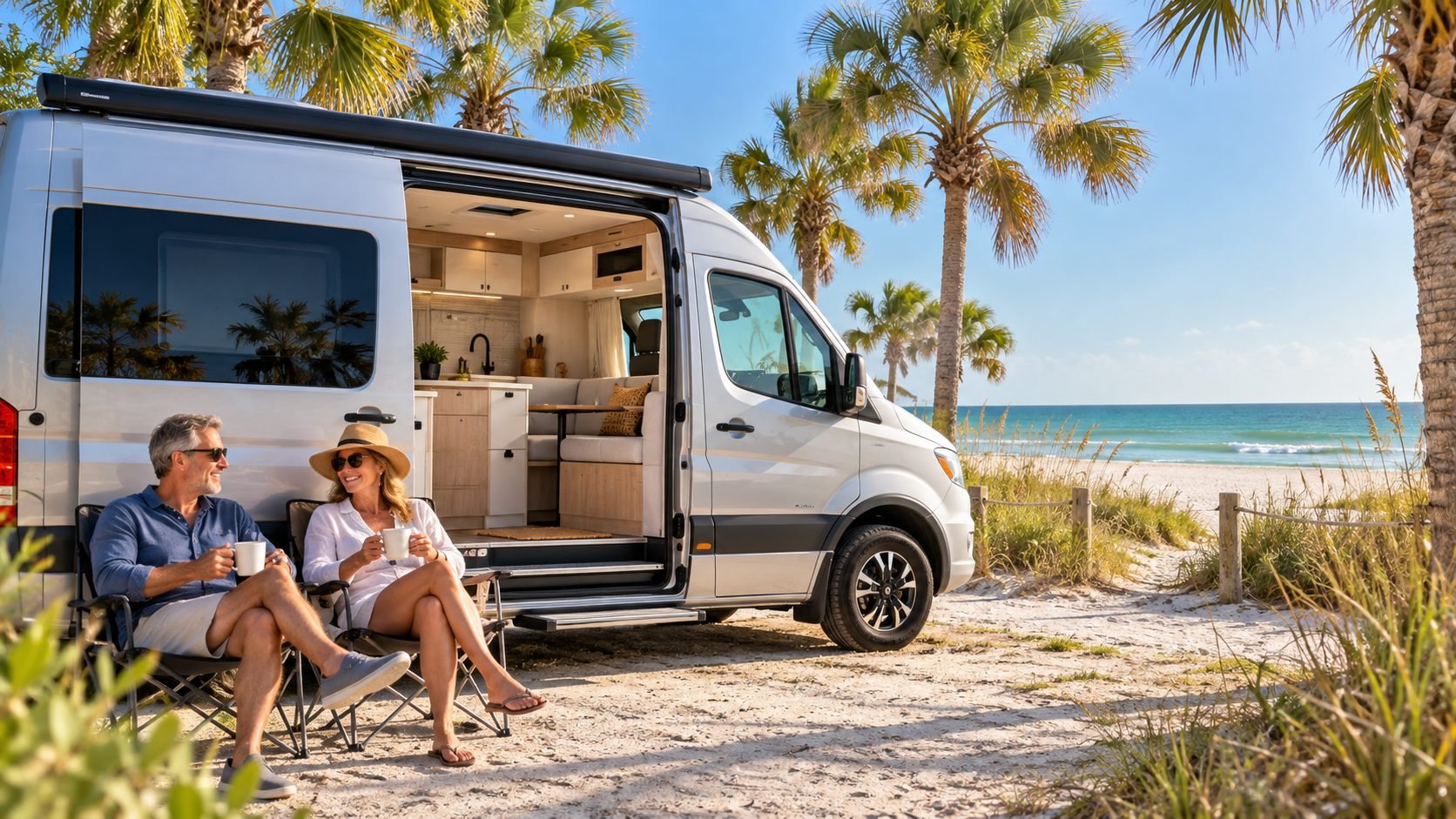
Yes. Small motorhomes are well suited to Florida’s state parks, beach campgrounds, and coastal routes, where shorter rigs fit more sites and narrow roads more easily. Strong air conditioning, good ventilation, and regular roof and seal care are important in Florida’s heat and humidity.
Should a first-time buyer get a new or used motorhome?
A used motorhome can lower your entry cost and help you learn what you like before investing more. A new motorhome offers full warranty coverage and the latest features. Many first-time buyers start with a lightly used model, then upgrade once they know their preferred layout and size.
Final Takeaway
The best small, easy-to-drive motorhome for most first-time buyers is a Class B camper van, with Class B+ and compact Class C models close behind for travelers who want more space. Focus on drivability, sleeping capacity, bathroom layout, and where you will store the RV, and always test drive more than one type before deciding.
Ready to compare small motorhomes in person? Browse Class B, Class B+, and Class C motorhomes at Gerzeny’s RV World, or contact the team at (941) 966-2182 to schedule a visit to the location nearest you.