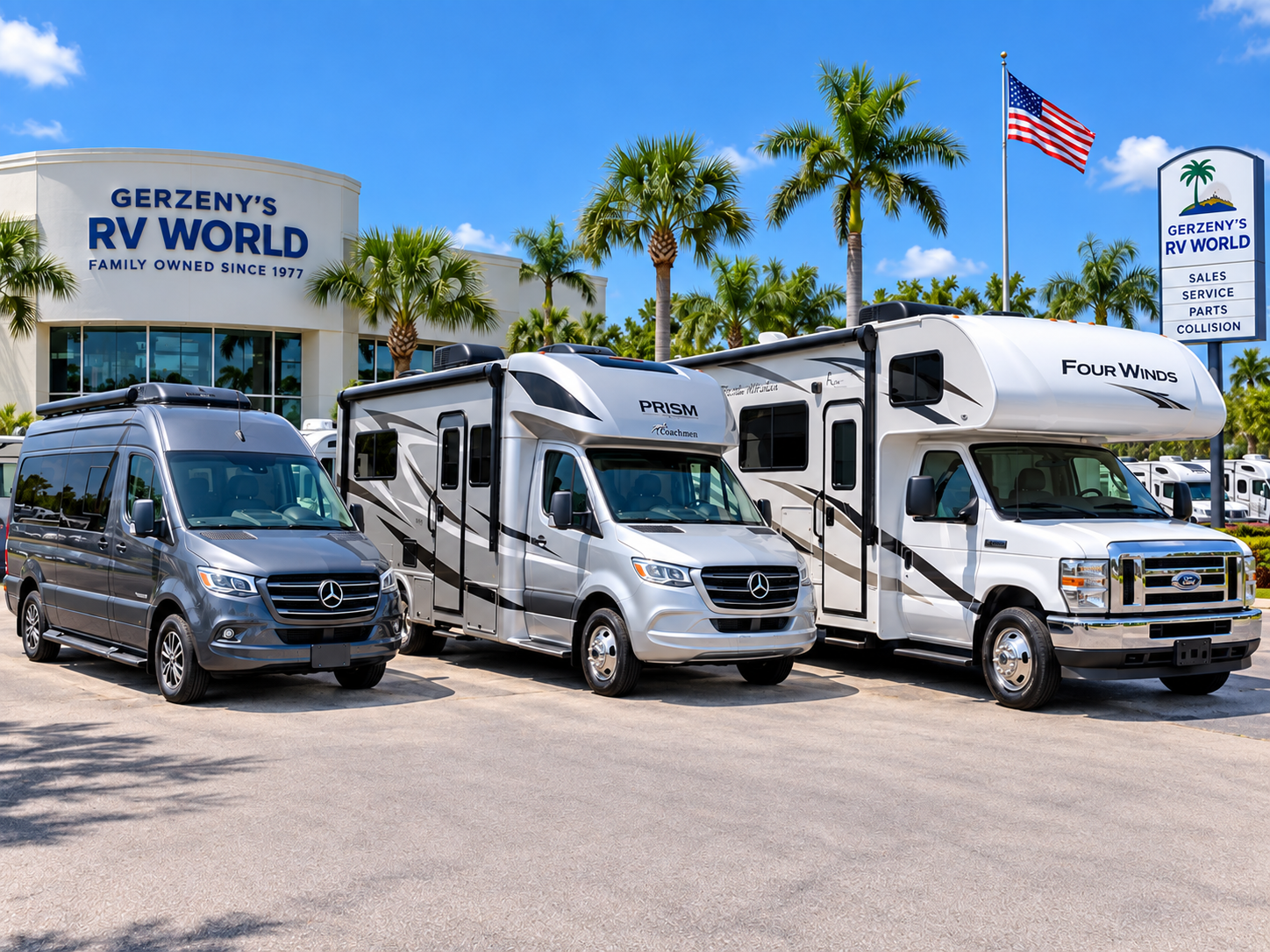
What is the difference between a Class B, a Class B+, and a Class C motorhome?
What Is the Difference Between a Class B, a Class B+, and a Class C Motorhome?
Class B motorhomes are compact, van-based RVs typically built on commercial vehicle chassis with sleeping for two to four, basic kitchen and bathroom facilities, and fuel efficiency prioritized over space. Class B+ motorhomes add a raised roof or expanded width to Class B designs, increasing interior height and living space while maintaining the maneuverability of van-based platforms. Class C motorhomes are mid-size RVs built on truck chassis with separate living areas, sleeping for four to eight, full-featured kitchens and bathrooms, and significantly more living space than Class B models. Understanding these differences helps RV buyers identify which motorhome class best matches their camping style, travel frequency, budget, and living space requirements. Gerzeny's RV carries all three classes across Florida locations, making direct comparison and test-drives straightforward for buyers evaluating options.
What Exactly Is a Class B Motorhome?
A Class B motorhome is a compact, self-contained RV built on a commercial van chassis (such as Ford Transit, Mercedes Sprinter, or RAM Promaster). It functions as a complete home on wheels despite modest interior dimensions, with sleeping accommodations, kitchen facilities, bathroom, and living space integrated within the van's footprint.
Class B motorhomes typically measure 20-25 feet in length and 7-8 feet in width, matching standard van dimensions for easy maneuvering, highway lane changes, and parking in regular parking spaces. This compact size appeals to travelers valuing nimbleness and fuel economy over expansive living quarters.
Sleeping capacity ranges from two to four depending on configuration. Basic designs feature a front cab with driver/passenger seats that may fold to create additional sleeping, plus a rear bed. Models with dinette conversions provide additional sleeping positions by converting dining areas to beds.
Kitchen facilities are minimal but functional. Most Class B motorhomes include a compact two-burner cooktop, under-counter refrigerator, and small sink with limited counter space. Food preparation focuses on simple meals rather than elaborate cooking.
Bathroom facilities are extremely compact, typically featuring a porta-potty toilet and compact shower enclosure (or shower/toilet combination in space-saving designs). Freshwater and waste systems are smaller than larger RV classes, requiring more frequent refilling and dumping during extended trips.
Living space feels cozy but functional. A small dinette seating area, sleeping platform, kitchen, and bathroom occupy the van's entire interior. Most buyers describe the experience as similar to living in a studio apartment.
Fuel economy represents a major advantage of Class B designs. These compact motorhomes typically achieve 18-24 miles per gallon (or better with modern diesel engines), making longer road trips more economical than larger RV classes.
Prices typically range from $50,000 to $100,000+ depending on brand, age, condition, and customization. Used Class B motorhomes often provide exceptional value, with five to ten-year-old examples priced significantly lower than new models while maintaining excellent functionality.
What Exactly Is a Class B+ Motorhome?
A Class B+ motorhome bridges the gap between Class B compactness and Class C spaciousness. It starts with a Class B van chassis but adds a raised roof section (creating approximately 6.5-7 feet of interior headroom) or expanded body width to increase interior volume while maintaining the maneuverability of smaller van platforms.
Class B+ motorhomes measure 22-28 feet in length with the raised roof or expanded width creating noticeably more interior space than standard Class B designs. The trade-off is slightly reduced fuel economy compared to traditional Class B, though it typically remains better than full-size Class C motorhomes.
Sleeping capacity ranges from two to six depending on model and configuration. The additional height accommodates convertible dinettes, pull-down overhead beds, or memory foam bed systems that wouldn't fit in traditional Class B designs. Some models feature convertible living areas creating multiple sleeping options.
Kitchen facilities are more substantial than Class B but still compact compared to Class C. Most Class B+ models include a three-burner cooktop or cooktop/oven combination, decent-sized refrigerator, and improved counter space. The additional height allows for taller appliances and storage options.
Bathroom facilities benefit from the increased height. Full-size toilets (versus porta-potties), separate shower enclosures (rather than combined shower/toilet), and better ventilation are more common in Class B+ designs. Some models approach Class C-style bathroom functionality while maintaining Class B-style compactness.
Living space feels significantly more open than Class B, with full headroom throughout the interior rather than hunching in low-ceiling sections. The additional space reduces claustrophobic feelings during extended camping trips or bad weather when residents spend more time indoors.
Fuel economy typically ranges from 16-20 miles per gallon, slightly lower than Class B but markedly better than Class C. This represents a meaningful compromise for buyers wanting more space without sacrificing fuel economy completely.
Prices typically range from $75,000 to $150,000+ depending on brand, features, and customization. Class B+ motorhomes command premiums compared to standard Class B models but cost less than equivalent Class C motorhomes, making them appealing to buyers seeking space without Class C-sized budgets.
What Exactly Is a Class C Motorhome?
A Class C motorhome is a mid-size RV built on a truck chassis (typically one-ton pickup trucks or larger commercial truck platforms) with a distinctive raised bedroom section over the cab. This design creates separate living spaces and substantially more interior volume than Class B or B+ motorhomes.
Class C motorhomes measure 26-35 feet in length and up to 8.5 feet in width, requiring more careful maneuvering and backing in tight spaces compared to smaller motorhome classes. Many require special driving licenses depending on weight and braking systems, though most fall within non-commercial driving ranges.
Sleeping capacity ranges from four to eight depending on layout. The over-cab bedroom typically sleeps two, with the rear convertible dinette or sofa providing additional sleeping positions. Some models feature separate bedroom areas with actual beds rather than convertibles.
Kitchen facilities are full-featured compared to smaller classes. Class C motorhomes typically include a three or four-burner cooktop with oven, standard refrigerator (often with freezer section), generous counter space, and real cabinetry. Food preparation more closely resembles home cooking than the simplified meals common in Class B designs.
Bathroom facilities are significantly larger. Full-size toilets, standard shower enclosures (not combined units), proper ventilation, and often separate vanities with actual mirrors represent dramatic improvements over smaller motorhome classes. Some Class C models rival home bathroom functionality.
Living space features distinct areas rather than combined multipurpose spaces. A separate bedroom (often the over-cab area), living room with actual seating, dining area with booth seating, and standalone kitchen create a more home-like environment. Residents can spread out without feeling crowded, making extended trips more comfortable.
Fuel economy is the trade-off for space and comfort. Class C motorhomes typically achieve 10-15 miles per gallon depending on engine size, terrain, and driving habits. Diesel engines sometimes improve mileage slightly but often at significant purchase price premiums.
Prices typically range from $75,000 to $200,000+ depending on brand, age, features, and construction quality. Used Class C motorhomes often provide exceptional value, with ten to fifteen-year-old examples priced substantially below new models while maintaining solid functionality and comfort.
How Do These Three Motorhome Classes Compare?
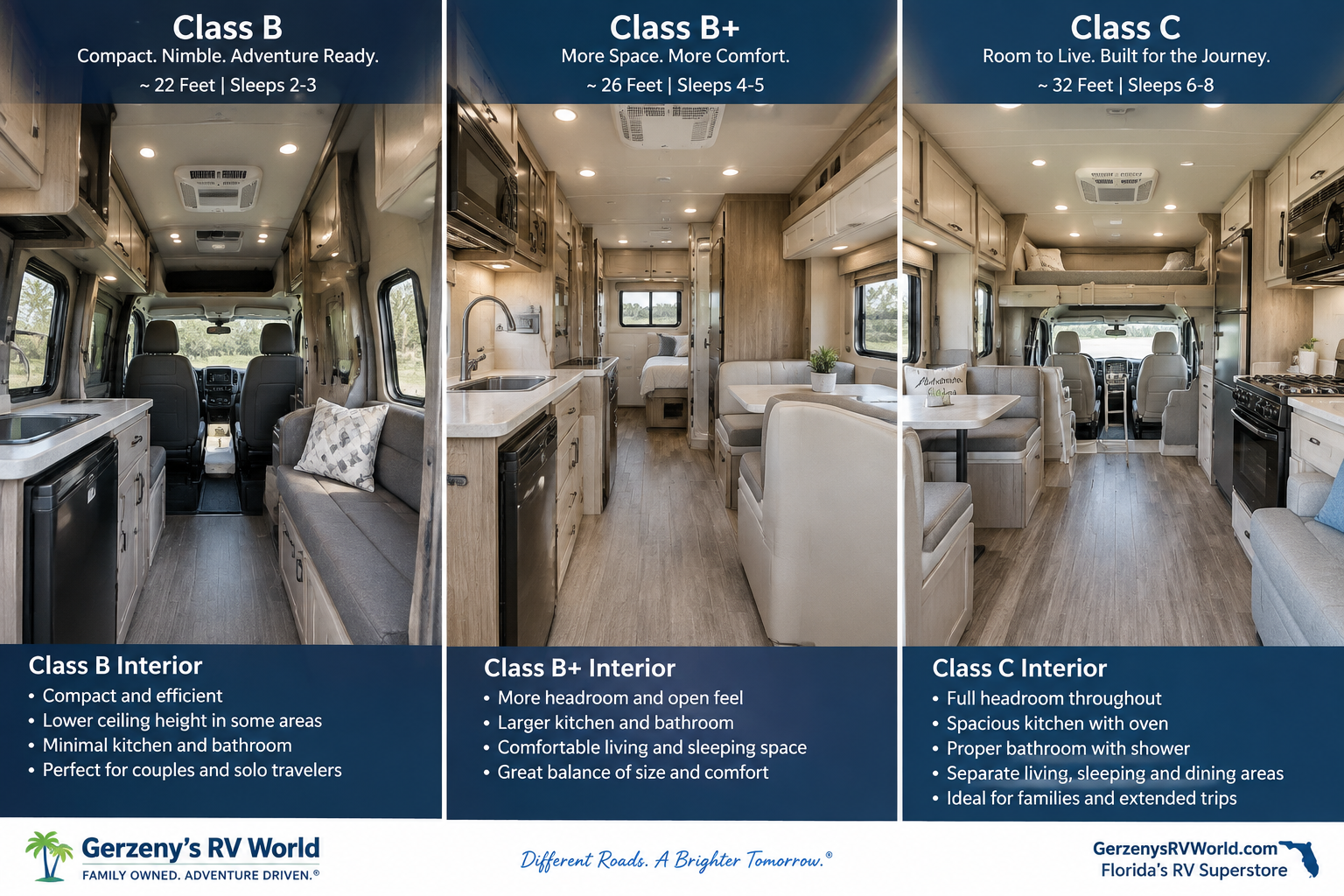
Direct comparison reveals distinct trade-offs across size, space, price, fuel economy, and camping style.
Class B prioritizes maneuverability, fuel economy, and budget accessibility. These compact motorhomes suit couples or solo travelers, boondocking enthusiasts who value off-grid camping, and buyers with modest RV budgets. Trade-offs include limited space, minimal cooking/bathroom facilities, and shorter comfortable camping durations.
Class B+ targets buyers seeking more space than Class B without Class C fuel costs or maneuverability challenges. These motorhomes appeal to small families, long-term travelers, and anyone regularly camping more than a few days per trip. The additional height and width create meaningful space improvements while maintaining better fuel economy and parking ease compared to Class C.
Class C appeals to families, extended camping trips, and buyers prioritizing comfort and home-like amenities. These motorhomes handle multiple weeks of camping with genuine comfort, feature full-size appliances and bathrooms, and create separate living spaces rather than multipurpose cabins. Trade-offs include lower fuel economy, higher purchase prices, and parking/maneuvering challenges in tight spaces.
Camping Style Matching:
Class B suits couples, short weekend trips (1-3 nights), boondocking, and budget-conscious buyers.
Class B+ suits small families, week-long trips, mixed camping (some hook-ups, some boondocking), and comfort-conscious buyers with moderate budgets.
Class C suits families, extended trips (2+ weeks), resort-style campgrounds with full hook-ups, and buyers prioritizing comfort over fuel economy.
Budget Considerations:
Class B: $50K-$100K new; $20K-$50K used
Class B+: $75K-$150K new; $40K-$80K used
Class C: $75K-$200K new; $35K-$100K used
Maneuverability and Parking: Class B and B+ motorhomes fit standard parking spaces and navigate tight roads easily. Class C motorhomes require careful backing, full-size parking, and sometimes special camping sites or parking facilities.
What Common Mistakes Do Motorhome Buyers Make?
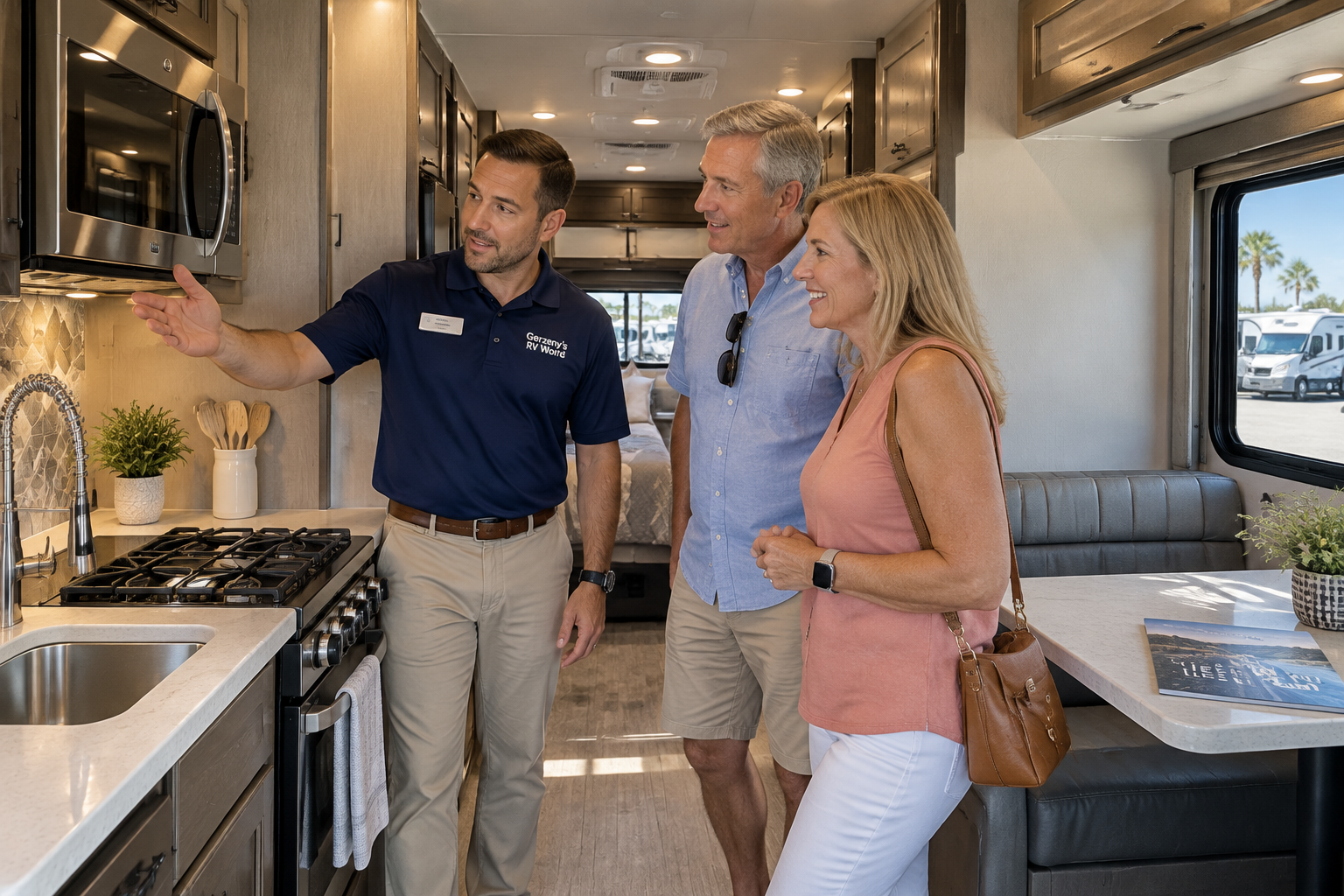
Avoiding pitfalls ensures satisfaction with your motorhome purchase.
Overbuying space beyond actual needs. Many buyers purchase Class C motorhomes imagining extended family camping trips that rarely happen, then struggle with fuel costs and parking challenges for daily solo or couple camping. Honestly assessing your actual camping frequency and duration prevents this mistake.
Underestimating space needs. Conversely, buyers purchasing Class B motorhomes for frequent week-long family trips discover cramped quarters and limited cooking/bathroom facilities creating frustration. Testing actual camping scenarios before purchase clarifies true needs.
Ignoring fuel economy math. A Class C motorhome costing $20,000 more upfront and consuming fuel at 12 miles per gallon versus a Class B+ at 18 mpg costs significantly more over ownership. Calculate true total cost of ownership across fuel, maintenance, and financing before deciding.
Skipping test-drives and overnight camping. Renting a similar motorhome for a weekend or taking a provided motorhome on extended test drive reveals comfort/functionality issues that short showroom inspections miss. Sleeping overnight in the motorhome identifies problems with beds, ventilation, bathroom access, and noise isolation.
Neglecting ongoing maintenance costs. Class C motorhomes require more frequent servicing, larger repairs, and higher consumables (propane, water, waste treatment) than smaller classes. Budgeting for these costs prevents financial surprise after purchase.
Choosing based on appearance rather than functionality. An outdated Class C with excellent systems may serve better than a newer-appearing Class B with minimal features. Prioritize layout, appliances, and systems over cosmetics.
Buying used motorhomes without pre-purchase inspection. Water leaks, mechanical issues, appliance failures, and structural damage create expensive problems after purchase. Professional pre-purchase inspections by RV technicians identify hidden issues before committing.
How Gerzeny's RV Helps You Find Your Perfect Motorhome
Gerzeny's RV has specialized in Class B, B+, and Class C motorhomes for over 40 years, providing expertise, inventory breadth, and support that helps Florida buyers identify their ideal motorhome.
The dealership maintains extensive inventory across all three motorhome classes with hundreds of new and pre-owned options. This breadth allows direct comparison across classes, brands, and price points without shopping multiple dealerships. Customers can test-drive Class B, B+, and Class C models sequentially to assess comfort and functionality differences firsthand.
Expert sales staff understand the nuances distinguishing these motorhome classes and can guide customers toward options matching their specific camping needs, budget, and travel frequency. Rather than pushing the most expensive option, Gerzeny's staff asks clarifying questions about intended use to ensure good matches.
Multiple Florida locations (Nokomis, Lakeland, Bradenton, Fort Myers) provide convenient access across central and southwest Florida. Customers can visit the most convenient location or compare inventory across multiple sites.
Flexible financing options make motorhome ownership accessible across budgets. Pre-approval before shopping clarifies budget parameters and negotiating strength. Trade-in programs that fairly value existing RVs simplify upgrading.
Professional service department with RV technicians provides maintenance and repairs after purchase, creating long-term support relationships. Buying where you service your motorhome ensures consistent expertise with your specific machine.
Parts availability for common motorhome repairs and maintenance ensures convenient access to components when needed rather than special-ordering from distant suppliers.
Trial ownership options through rental programs let customers experience different motorhome classes firsthand before committing to purchase. Renting a Class B, B+, or Class C for a weekend trip clarifies comfort and functionality preferences based on actual camping experience.
Frequently Asked Questions
Which motorhome class is best for a family of four?
Class B+ and Class C motorhomes work best for families of four. Class B models feel cramped for four people during extended trips. Class B+ offers increased comfort compared to Class B while maintaining reasonable fuel economy and parking maneuverability. Class C provides the most comfort and space, with full-size appliances and bathrooms, though fuel costs are higher. Your choice depends on camping frequency (weekend trips versus extended vacations) and whether fuel economy or comfort takes priority.
Can I drive a Class C motorhome with a regular driver's license?
Most Class C motorhomes fall within non-commercial driving ranges, requiring only a standard driver's license. However, some larger Class C models approach 14,000 pounds, potentially requiring a commercial driver's license in some states. Contact your state's DMV or the motorhome dealer to confirm licensing requirements for your specific model before purchasing.
How much fuel does each motorhome class consume?
Class B motorhomes typically achieve 18-24 miles per gallon. Class B+ motorhomes achieve 16-20 mpg depending on features and engine. Class C motorhomes achieve 10-15 mpg. Diesel engines sometimes improve fuel economy slightly on larger classes, though at significant purchase price premiums. Calculate your actual fuel costs based on anticipated mileage before deciding.
Are Class B+ motorhomes worth the premium over Class B?
Class B+ motorhomes justify the premium if you camp frequently (multiple weeks per month) or take extended trips (week or longer). The additional headroom, improved kitchen/bathroom facilities, and expanded living space create meaningful comfort improvements. For occasional weekend camping (few trips per year), standard Class B motorhomes provide better value despite less space.
Can I live full-time in a motorhome?
Class B motorhomes work for full-time living but feel cramped for long-term occupation. Class B+ motorhomes provide better full-time comfort with improved facilities and space. Class C motorhomes offer the most livable full-time experience, with proper bedrooms, functional kitchens, and genuine bathrooms. Factors like mail forwarding, insurance, parking regulations, and waste management systems require consideration beyond the motorhome itself.
How long do motorhomes typically last?
Motorhomes routinely remain functional and livable for 20-30+ years with regular maintenance. Engine life depends on use and maintenance, with many lasting 15-20 years or longer. Systems like appliances, plumbing, and electrical may require replacement or updates as motorhomes age. Professional inspections help assess condition and remaining life expectancy before purchasing used models.
What is the difference between a motorhome and a travel trailer?
Motorhomes (Class A, B, C) are self-propelled RVs with engines and onboard driving systems. Travel trailers are towed behind vehicles and require a tow vehicle with adequate capacity. Motorhomes offer convenience and independence; trailers offer cost savings and the ability to unhitch for local exploration. Gerzeny's RV carries both motorhomes and travel trailers, allowing comparison to determine which suits your needs.
Should I buy new or used?
Used motorhomes often provide exceptional value, with five to fifteen-year-old examples priced 40-60% below new models while retaining solid functionality. New motorhomes offer warranty protection and latest features but cost substantially more. Your choice depends on budget, desired features, and comfort with potential maintenance needs on older models. Professional pre-purchase inspections help assess used motorhome condition.
Final Takeaway
Understanding the differences between Class B, B+, and Class C motorhomes helps you identify which class matches your camping style, travel frequency, budget, and comfort priorities. Class B motorhomes prioritize fuel economy and compact maneuverability for couples and weekend travelers. Class B+ motorhomes balance increased comfort and space with reasonable fuel economy for small families and regular camping enthusiasts. Class C motorhomes deliver home-like comfort and space for families and extended camping trips, trading fuel economy and parking ease for genuine living comfort.
Gerzeny's RV has specialized in all three motorhome classes for over 40 years, with extensive inventory across Florida locations enabling direct comparison and test-driving. Visit Nokomis, Lakeland, Bradenton, or Fort Myers to test-drive models, discuss your camping needs with knowledgeable staff, and explore financing options matching your budget. Contact Gerzeny's RV today to start your journey toward finding the perfect motorhome for your family's adventures.